

Palm Tree Trimming in Lake City, FL Without Over-Pruning
Palms are not like oaks. They grow from a single bud at the top, they cannot seal wounds the way hardwoods do, and every green frond is feeding the tree. That is why UF/IFAS extension advises removing only fronds that are completely dead, along with flower and fruit stalks, and leaving green and yellowing fronds alone. A palm trimmed down to a few upright fronds is not stronger. It is weaker, and it is short on food.
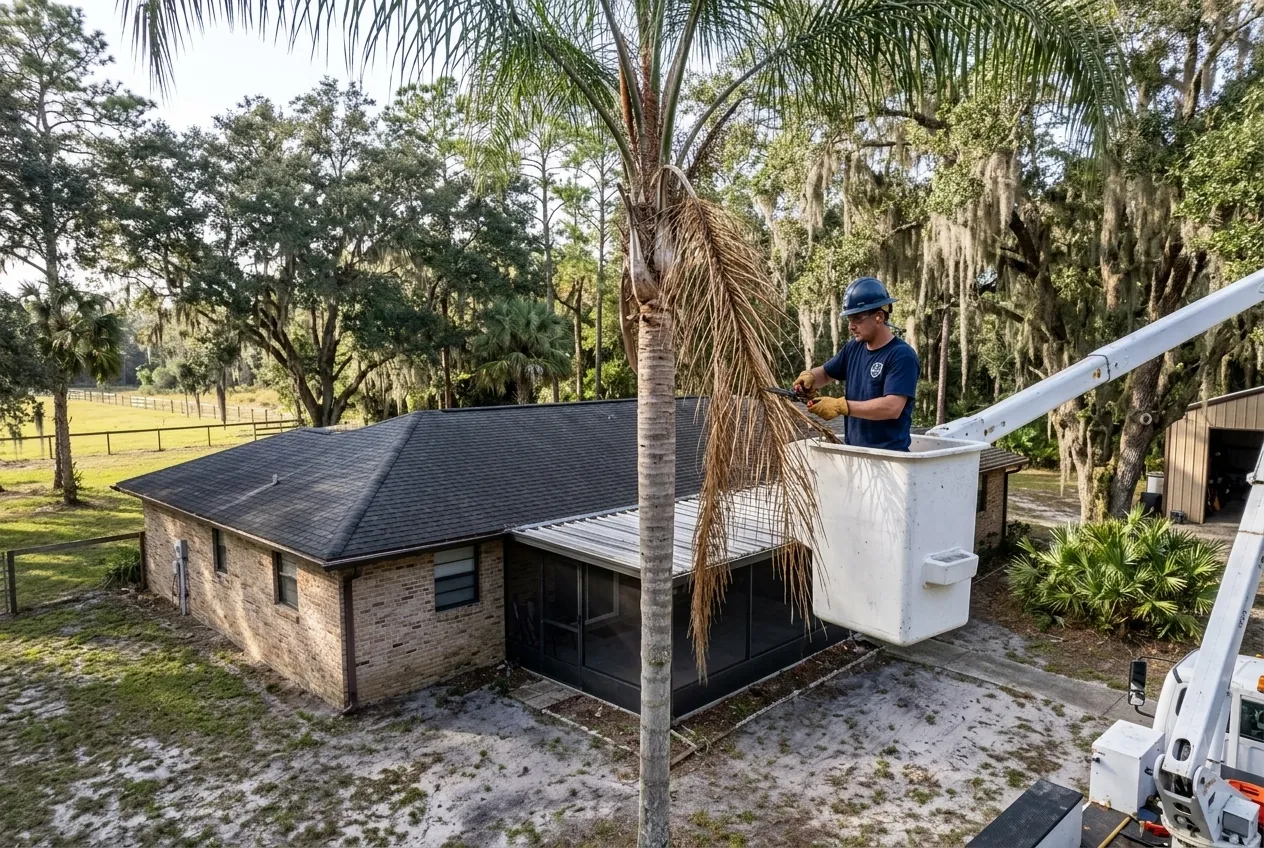
Our palm trimming sticks to that approach. We take off brown fronds, seed and flower stalks, loose boots that are ready to fall, and anything rubbing the roof or screen. The rest of the crown stays. You end up with a tidy palm that still looks like a palm.
Palm Trimming in Lake City Without Hurricane Cuts
The hurricane cut, where a palm is stripped to a small tuft at the top, is often sold as storm preparation. The evidence points the other way. UF/IFAS extension reports that after the 2004 and 2005 hurricane seasons, palms that had been heavily pruned were more likely to lose their crowns than palms with full heads. A full crown flexes and spreads wind load. A stripped one leaves the bud more exposed. The exception is a palm being transplanted, where removing fronds reduces water loss while roots regrow.
Lake City Palm Trees We Trim Most
- Sabal palm (cabbage palm). The official Florida state tree, and the native palm you see in Columbia County hammocks and pastures. Tough in wind and cold. Old frond bases, the boots, can stay on for years or drop on their own.
- Queen palm. Popular for its feathery look, but UF/IFAS extension rates it for zones 9B through 11, and north Florida sits colder than that. Many queen palms here show cold damage after hard freezes and need dead fronds cleaned out afterward.
- Pindo palm. A cold-hardy feather palm with arching blue-green fronds and heavy fruit clusters that drop and draw insects if left on.
- Chinese fan, windmill and Washingtonia palms. Fan palms that handle north Florida winters well. Washingtonias grow very tall and are often trimmed from a lift.
Palm Tree Trimming in Lake City: Seed Stalks, Fruit and Boots
Much of palm trimming is really about what the palm produces. Queen and pindo palms grow long flower stalks that become heavy clusters of fruit. The fruit drops, stains pool decks and driveways, and draws insects. Removing the stalks after flowering keeps the mess down without harming the palm. Sabal palms flower too, and their small black fruit spreads seedlings into beds and lawns.
Sabal palm boots, the old frond bases that stay on the trunk, are a matter of taste. Some people like the crisscross look. Others prefer a smooth trunk. Boots that are loose can come off safely. Boots still firmly attached should be left, because cutting them too close can wound the trunk. Over time many sabals drop their boots on their own, leaving the clean trunk you see on older palms.
Pests and diseases are another reason to watch palms. Ganoderma butt rot, a fungal disease that rots the base of the trunk, has been documented across Florida and has no cure. If a palm shows a shelf-like conk near the base, it should be removed before it falls. Wounds from spikes or careless cuts give diseases an easier way in, which is one more reason to trim gently.
Palm Trimming Cost in Lake City
Palms are priced per tree, mainly by height and how they can be reached. Here is what most Lake City and Columbia County palm work runs.
| Job | Typical range | What moves the price |
|---|---|---|
| Short palm, reachable from a ladder | $85–$140 | Number of dead fronds and seed stalks |
| Mid-height sabal or queen palm | $120–$200 | Height and access around the trunk |
| Tall palm, lift or climbing gear | $175–$275 | Height and whether a lift fits the yard |
| Boot removal or trunk cleanup | Added per palm | How many boots are loose versus attached |
| Cold-damaged palm cleanup | $85–$275 | How much dead material and how high |
| Palm removal | $225–$1,100 | Height, what sits below, stump grinding |
Several palms trimmed on the same visit cost less each. If a palm has died, often a queen palm after a hard freeze, removal is priced separately, and the stump can be handled with stump grinding. Palm stumps are fibrous and grind differently from hardwood, but they are usually quick.
Palm Tree Removal in Lake City
Sometimes a palm has to go. Queen palms killed by a hard freeze, palms with Ganoderma at the base, palms leaning over a roof after a storm and palms planted too close to the house are the usual reasons. Palm removal is generally simpler than hardwood removal because there are no limbs to rig, but tall palms beside structures are still lowered in pieces rather than felled.
After removal, the stump can be ground or left low. Palms do not resprout from the stump, so grinding is mostly about appearance and making room for something new. If you are replacing a lost queen palm, consider a cold-hardy species like sabal, pindo or a fan palm, which handle north Florida winters far better. Removal pricing is in the table above, and larger removals follow our general tree removal process.
Palm Tree Care in Lake City After Cold Snaps and Storms
Lake City gets real freezes, which is the biggest difference between palm care here and in south Florida. After a freeze, it is tempting to cut every brown frond right away. Waiting until warm weather returns and new growth shows lets you see whether the bud survived. If the spear, the newest unopened leaf, pulls out easily and smells rotten, the bud is dead and the palm will not recover.
Before storm season, take off dead fronds and heavy seed stalks that could fly into windows, and leave the green crown full. If a storm does knock fronds loose, damaged ones can come off, but healthy fronds should stay. Our hurricane tree prep guide covers palms along with shade trees.
Palm Tree Trimming in Columbia County: No Spikes on Living Palms
Climbing spikes punch holes in a palm trunk, and those wounds never heal. We trim living palms from a ladder, a lift or with climbing gear that does not puncture the trunk. Cuts are made a few inches out from the trunk so we do not gouge it, and tools are cleaned between palms to avoid moving disease from one to the next.
Palm Tree Service Lake City and Beyond
Palm trimming fits well with other work on the same visit. Many customers book it together with tree trimming on the oaks over the house. We trim palms in town and across the county, including Five Points and Fort White, and nearby Jasper. Planning new plantings? The best shade trees for Lake City yards post includes palms that handle our winters. For all services, see the Lake City tree service homepage, or send a palm count with a rough height for each.
Palm Tree Trimming Lake City FAQ
Straight answers before you call.
Most palms need trimming once a year, sometimes twice for fast-growing or heavy-fruiting palms like queens and pindos. Sabal palms can go longer since they shed boots slowly. The goal is to remove dead fronds and seed stalks before they fall, not to keep the crown short.
No. UF/IFAS extension found that heavily pruned palms were more likely to lose their crowns in the 2004 and 2005 hurricanes than palms with full heads. Stripping green fronds also takes away the palm's food supply. Remove dead fronds and heavy seed stalks before storm season and leave the rest.
Not necessarily. Wait for warm weather and watch for new growth from the center. If the newest spear pulls out easily and smells of rot, the bud is dead and the palm will not recover. If new fronds emerge, trim off the dead ones and the palm can come back. Queen palms are rated for warmer zones than north Florida.
Yellowing or orange-spotted older fronds often point to potassium deficiency, which is common in Florida soils. Cutting those fronds off makes it worse because the palm pulls nutrients from them first. A palm fertilizer with slow-release potassium and magnesium is the usual fix.
Most palm removals in Lake City run about $225 to $1,100, depending on height and what sits under the palm. A short sabal out in the lawn sits near the bottom of that range, and a tall Washingtonia leaning toward a roof near the top. Stump grinding is priced separately.
Not on palms that are staying. Spike holes never heal in a palm trunk and can let in disease. We use ladders, lifts and non-puncturing climbing gear on living palms. Spikes are only used on palms that are being removed.
Palms Looking Ragged?
Tell us how many and how tall. Priced per palm.