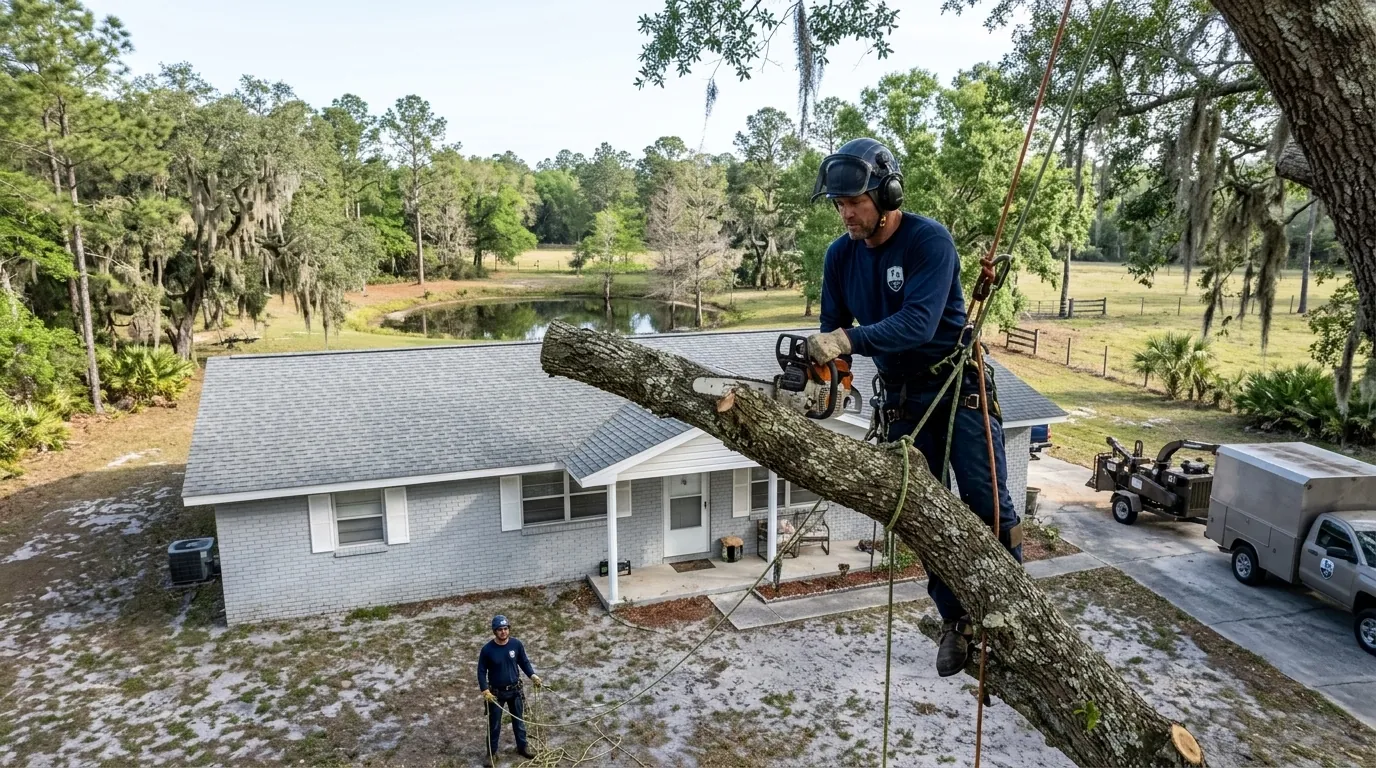
 Tree down on the roof?
 Address not listed?
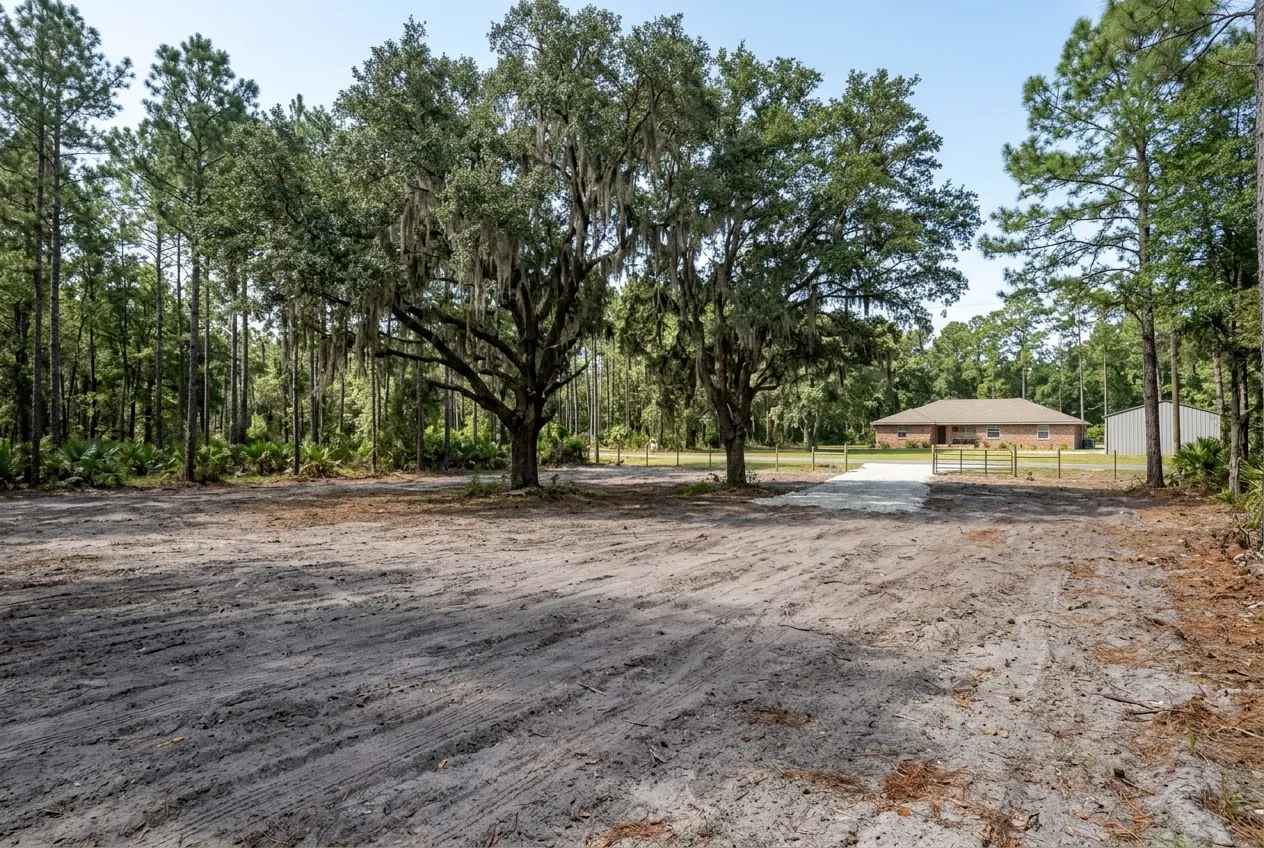
Land clearing in this part of north Florida usually means one of a few things: opening a home site on a wooded parcel, cleaning up an overgrown lot before it is sold, reclaiming the edge of a pasture that the woods have crept into, or cutting a driveway and pad through pines and scrub. Each job is different, but the planning questions are the same.
Land Clearing in Columbia County Starts With a Plan
Before any equipment arrives, decide what the finished site should look like. That decision drives the cost more than the acreage does.
- Where the house, well, septic system and driveway will go. Your septic designer and builder may need specific areas left open or untouched.
- Which trees to keep. A few healthy live oaks or longleaf pines around a home site add shade and value. Mark them with tape before clearing starts.
- How clean the ground needs to be. Mulching brush in place is cheaper than grubbing out every root. A building pad needs more than a wildlife food plot.
- Where debris goes. Chipped, mulched, burned or hauled. Each option has a different price and different rules.
Columbia County Land Clearing Costs per Acre
Light clearing in Columbia County generally starts around $1,600 per acre and rises with tree size, density and how much root removal you need. These are 2026 market ranges for planning, not quotes.
| Work | Price range | What changes it |
|---|---|---|
| Light clearing or underbrushing | From $1,600 per acre | Palmetto, brush and small trees; mulched in place |
| Moderate wooded lot | $3,000 to $6,000 per acre | Mixed pines and hardwoods; trees cut and chipped or stacked |
| Heavy clearing with stump removal | $6,000+ per acre | Large trees, grubbing roots, hauling debris off site |
| Single home site pad and drive | Priced by the job | Pad size, driveway length, trees kept, soil conditions |
| Leftover stumps, ground | $95 to $450 per stump | Used where only a few large stumps remain |
Smaller sites often cost more per acre than large ones because the equipment still has to be hauled in. If you can combine a home site, driveway and fence line into one mobilization, the per-acre price usually drops. Our land and lot clearing page explains how we price it.
Mulcher, excavator or dozer
Equipment choice changes both the price and the result. A forestry mulcher turns brush and saplings into a chip layer and leaves the soil mostly undisturbed, which suits underbrushing, trails and pasture edges. An excavator with a grapple pulls stumps and sorts debris with less soil loss than a dozer, which helps on home sites where you want topsoil left in place. A dozer is fastest for heavy pushing on large tracts but strips more ground. On many lots the best answer is a mix: mulch the edges, pull stumps where the house and drive go.

Burning Land Clearing Debris in Columbia County
Burning brush piles is common out here, and it is regulated. The Florida Forest Service handles burn authorizations, and Columbia County falls under its Suwannee Forestry Center. Under Florida's open burning rules, land clearing piles and pile burns require an authorization from the Florida Forest Service before they are lit; ordinary small-scale yard waste burning has its own, lighter set of rules.
The agency's published guidance for residential land clearing, meaning vegetation cleared for an existing or planned home site of no more than two family units, includes these requirements:
- An active burn authorization before ignition.
- Piles at least 300 feet from any occupied building other than the landowner's.
- At least 100 feet from any paved public road.
- At least 50 feet from wildlands or brush.
- Dry piles, attended the whole time they burn.
Non-residential clearing, such as subdivisions, commercial sites or rights-of-way, carries bigger setbacks, up to 1,000 feet from occupied buildings unless a permitted air curtain incinerator is used. Authorizations are not issued during some dry periods, and local burn bans can apply, so check conditions the day you plan to burn. When burning is not practical, mulching or hauling avoids the issue entirely.
Gopher Tortoises and Wildlife on Columbia County Land
Sandhill and well-drained pine ground across the county is gopher tortoise habitat. Gopher tortoises are listed as threatened in Florida. Before clearing or building disturbs a burrow, the tortoises have to be moved under a relocation permit from the state wildlife commission (FWC). Burrows have a distinctive half-moon opening with a sandy apron in front.
If you see burrows on your site, flag them and talk to FWC or an authorized gopher tortoise agent before clearing. Running equipment over occupied burrows can lead to serious penalties, and the permitting can take time, so it belongs at the start of your schedule, not the end.
Wetlands, Springs and Water Rules Near Lake City
Columbia County sits in the Suwannee River Water Management District, and the county is home to sensitive water resources, from the Santa Fe and Ichetucknee rivers in the south to the swampy ground around the Osceola National Forest in the north. Filling, ditching or clearing in wetlands can require state and federal permits. Low, wet areas with cypress, gum or bay trees are a sign to stop and ask. The district and the county Building and Zoning Department can tell you what applies to a given parcel.
City and County Clearing Rules Around Lake City
Within Lake City limits, how the tree ordinance applies depends on zoning. Single-family lots are exempt except for champion trees. Agricultural land that qualifies for the agricultural tax classification is exempt with two conditions: heritage-size trees within 50 feet of a property line or 400 feet of a public park need a permit, and a notice of activity must be filed with the city at least seven days before clearing. Commercial timber operations also file a notice. Commercial and development sites go through site plan review.
In unincorporated Columbia County, clearing tied to building, subdividing or commercial use runs through the county's development review, and agricultural and forestry work follows its own path. Our Columbia County tree permit guide goes into the details. When in doubt, call before the dozer shows up.
Selling Pine Timber Before You Clear
On larger parcels with merchantable pine, it can make sense to have a forester look at the stand before clearing. Timber value can offset some of the clearing cost, though prices swing and small or scattered stands may not be worth a logger's time. The Florida Forest Service's county foresters can give landowners general advice about timber and forest management. For a home site of an acre or two, the trees usually just come down as part of the clearing.
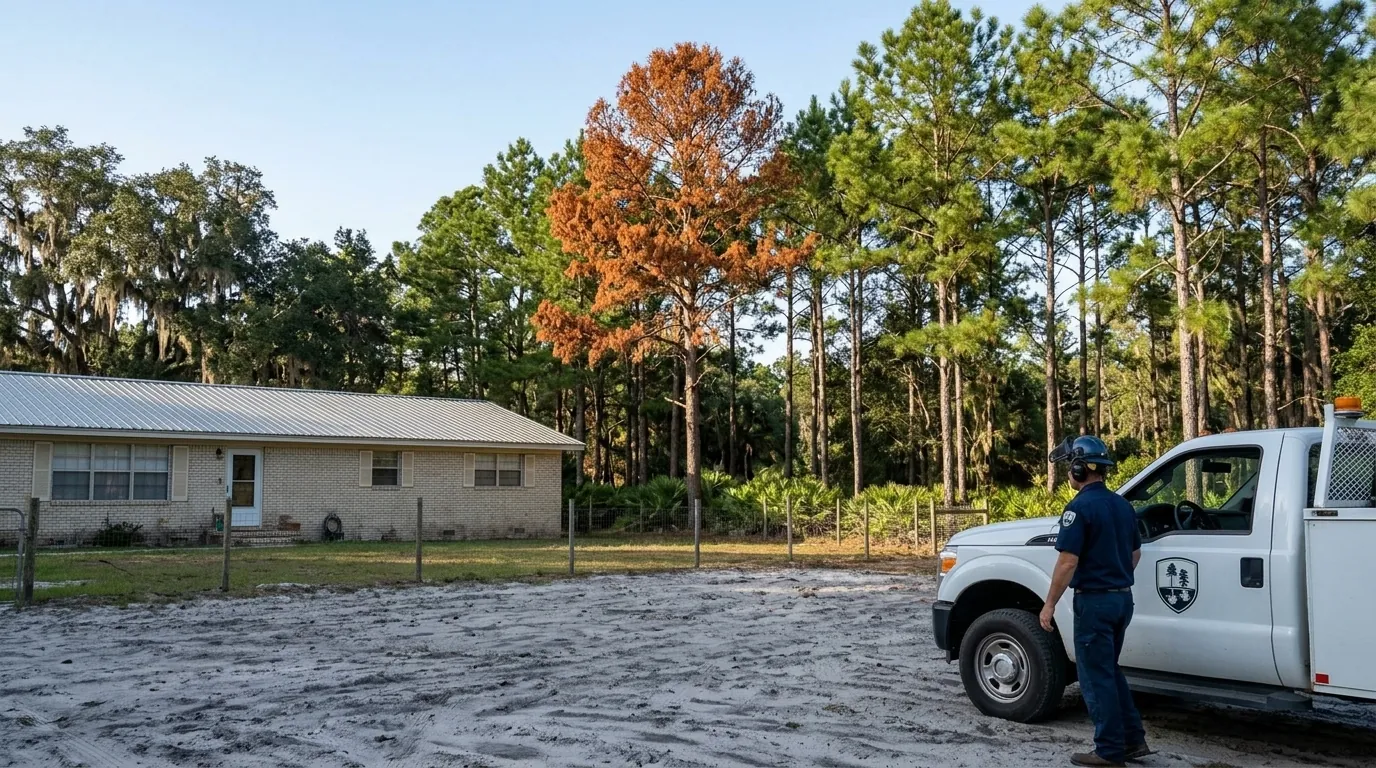
Dead and beetle-killed pines are a different matter. They have little timber value, and standing dead pines are a safety problem for equipment operators. If your property has a lot of them since the 2024 storms, see our guide to dead pines in Columbia County.
Land Clearing Across Columbia County Communities
The ground changes from one side of the county to the other, and that changes the job. Sandy, well-drained land around Fort White is often easier on equipment but more likely to have gopher tortoises. Wetter flatwoods toward Lulu and the national forest can bog machines down after rain. Around Ellisville and Columbia City, a lot of clearing work is opening pasture edges and cleaning up old fence rows. We also work across the line into nearby towns like Lake Butler and Branford.
Planning Your Columbia County Clearing Job
- Get a survey or at least know your property lines before anything is cut.
- Decide where the house, well, septic and driveway go, and which trees stay.
- Check for gopher tortoise burrows and wet areas.
- Confirm city or county rules for your zoning and use.
- Choose a debris plan: mulch, burn with authorization, or haul.
- Schedule after the wettest weeks if you can, to avoid ruts and stuck equipment.
We clear home sites, rural lots and pasture edges across Lake City and every corner of Columbia County, with tree removal and stump grinding for the trees that need special handling. Ask for a free estimate; we walk the land with you and then put one price in writing.